
Connecticut River valley lawns
Hydroseeding in Hartford, CT
New lawns, site stabilization and slope seeding, planned around valley sand, red till and a late-summer seeding window.
- No-charge visit, then a written quote
- Seed mix matched to the sun, shade and soil on your lot
- Grading, seeding and erosion control from one crew
Seed That Fits Hartford Ground
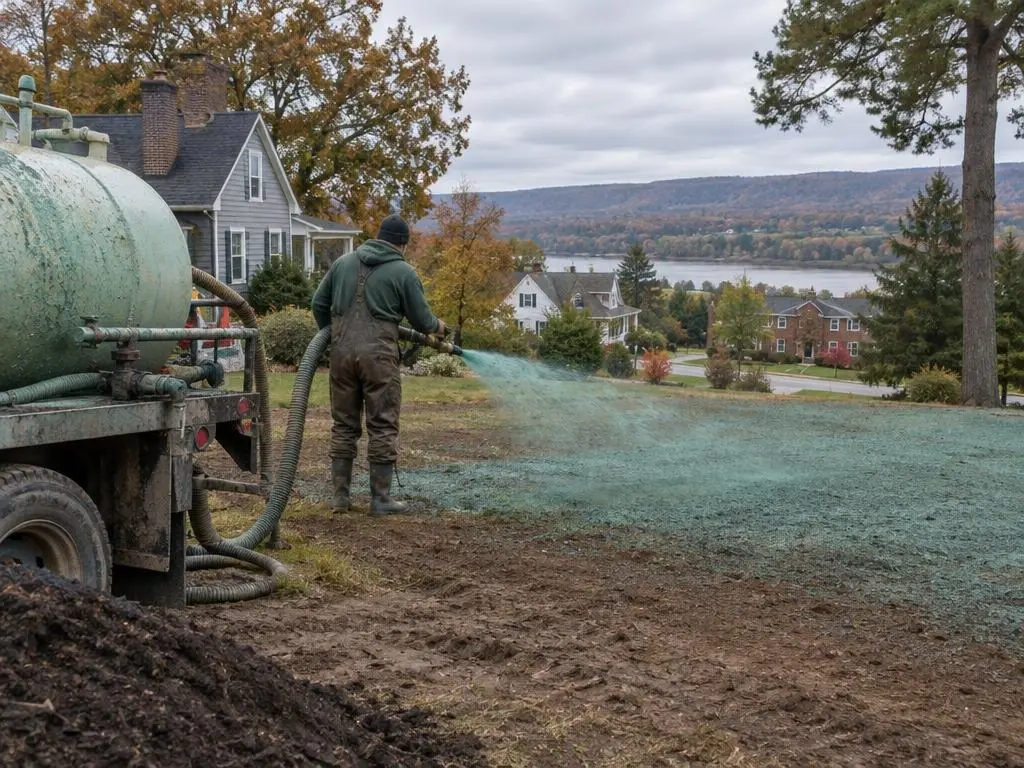
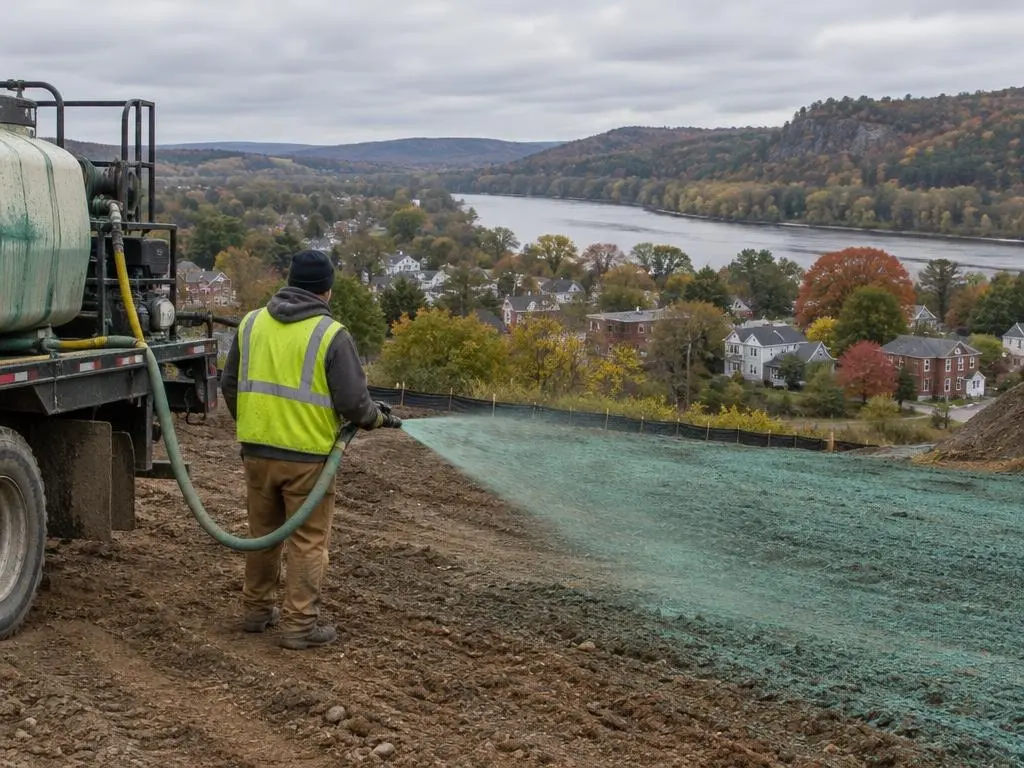
Hydroseeding in Hartford is how we put down new lawns, stabilize construction sites and green up banks across the city and the surrounding towns. Our tank truck blends wood or paper fiber mulch, seed, starter fertilizer and a tackifier into water, then sprays that slurry in an even layer over prepared soil. The fiber keeps the seedbed from drying out and the tackifier glues everything down, which is why hydro seeding works on ground where loose seed and straw would blow off or wash away. We handle the whole job: grading and topsoil, the seeding itself, erosion control on slopes, and silt fence where a site needs it.
Two soils in one valley
Hartford sits low on the Connecticut River, about 30 feet above sea level at the city's official elevation, and the ground changes quickly as you move away from the water. On the river terraces and outwash plains, the USDA's Hartford soil series is common: a sandy loam over stratified sand and gravel, somewhat excessively drained, with reddish-brown subsoil colors. Its type location is just south of the city in Rocky Hill. Water and fertilizer pass through it quickly, so new seed there needs more topsoil underneath and more frequent light watering.
On the low ridges and drumlins above the river you find soils formed in glacial till, like the Wethersfield series. The USDA describes it as well drained loam or silt loam made from reddish sandstone, shale and conglomerate, over dense till that roots and water struggle to get through. In the typical profile that dense layer starts around 27 inches down, and a perched water table can sit 18 to 30 inches below the surface from February through April. That is why some yards are soggy in spring and dry and hard by August.
What that means for your lawn
On sandy ground, we check how much real topsoil is left before spraying anything. Builder lots and old farm parcels are often stripped to a few inches. On till, the risk is compaction and spring wetness, so we loosen the surface, set the grade to shed water away from the house, and avoid seeding low spots that hold water until the drainage is fixed. Either way, hydroseed only performs as well as the seedbed under it.
When to seed around Hartford
The climate here is humid continental. Normals from Bradley International Airport put the average January high near 36 degrees and the low near 19, while July averages a high of about 85. Around 17 days in a typical year reach 90 degrees or more, and the area gets roughly 47 inches of precipitation spread fairly evenly through the year, plus around 52 inches of snow in an average winter. Hartford is in USDA hardiness zone 6b to 7a.
That climate favors cool-season grasses: turf-type tall fescue, Kentucky bluegrass, fine fescues and perennial ryegrass. They germinate and root best when soil is warm and nights are cool, so late summer into early fall is our first choice. Seed sprayed then has two good growing months before the ground freezes and comes back strong in spring. Spring seeding works once the snow is gone and the soil has warmed, but the young grass then has to get through July heat with shallow roots, so it needs steady watering. Midsummer seeding is possible if you can water twice a day without fail. On construction sites we seed whenever grading is finished, because bare soil should not sit open waiting for the perfect week.
Sod vs hydroseed vs dry seed
Sod gives you a finished look the day it goes down. It also costs the most. HomeGuide puts installed sod at $1 to $4 per square foot and hydroseeding at roughly 12 to 35 cents per square foot ($0.12 to $0.35). Sod rolls are heavy and hard to get into fenced city backyards, and on sandy soil they can dry out at the seams before they root.
Dry seeding with a spreader is the cheapest way to put seed on the ground, but the seed sits exposed. Birds take some, rain moves some, and the rest dries out between waterings. University of Nebraska Extension notes that hydroseeded grass usually shows in 5 to 7 days, while dry seeding takes two to three weeks. By its account, hydroseeding is slightly pricier than a dry-seeded lawn yet usually cheaper than sod.
A hydroseed lawn sits in between: lower cost than sod, faster and more even than dry seed, and able to cover slopes and odd shapes. Most homeowners can expect a first mowing about 4 to 6 weeks after seeding, as long as watering stays consistent.
Runoff, drains and bare ground
Much of Hartford was once marshy farmland along the Park River, which was enclosed and buried underground for flood control in the 1940s, and the river flats in the North and South Meadows sit low beside the Connecticut. When soil is left bare on a site in this city, the next heavy rain carries it to the nearest catch basin. On construction and redevelopment work we install silt fence along the low edges, protect storm inlets and get hydromulch onto exposed soil quickly. Connecticut's reference for these measures is the Connecticut Guidelines for Soil Erosion and Sediment Control, prepared by the state Department of Energy and Environmental Protection with the Connecticut Council on Soil and Water Conservation. If your project has an approved erosion and sediment control plan, we follow it and keep the controls in place until the grass has taken over.
What we handle
- New lawn installation on new homes, additions and cleared lots
- Commercial and construction site hydroseeding for builders and site contractors
- Erosion control on slopes and swales: hydromulch, bonded fiber matrix and erosion control blankets
- Sediment control: silt fence installation and storm inlet protection
- Yard grading, topsoil and dirt work, including excavation and trenching for drainage
- Lawn repair, renovation and overseeding of thin or damaged lawns
Every job starts with a site visit and a written estimate. Call (860) 812-7927 or send the form, and describe the ground as it is today: bare, weedy, worn or mid-construction.
Towns We Seed Around the Capital
We work in Hartford and across the river valley and the ridges on either side of it. West Hartford, Newington, Wethersfield and Rocky Hill run from older clay-heavy neighborhoods down to sandy river terraces. East Hartford, Manchester, Vernon, Ellington and South Windsor sit east of the river, with brooks, mill sites and growing subdivisions. Glastonbury and Cromwell bring hillside lots and river flats that see spring high water. To the west, Farmington, Avon, Simsbury, Bristol, Plainville, Southington and Berlin climb toward the trap rock ridges, where slopes and thin soil call for erosion control. North of the city, Windsor, Bloomfield, Enfield, Suffield and Granby mix former tobacco land, new construction and wooded lots. The town pages below go into the soil, slope and water conditions particular to each place.
- Hydroseeding in Hartford, CT
- Hydroseeding in West Hartford, CT
- Hydroseeding in East Hartford, CT
- Hydroseeding in Wethersfield, CT
- Hydroseeding in Glastonbury, CT
- Hydroseeding in Manchester, CT
- Hydroseeding in Newington, CT
- Hydroseeding in Rocky Hill, CT
- Hydroseeding in Cromwell, CT
- Hydroseeding in Berlin, CT
- Hydroseeding in Farmington, CT
- Hydroseeding in Avon, CT
- Hydroseeding in Simsbury, CT
- Hydroseeding in Windsor, CT
- Hydroseeding in South Windsor, CT
- Hydroseeding in Bloomfield, CT
- Hydroseeding in Enfield, CT
- Hydroseeding in Southington, CT
- Hydroseeding in Bristol, CT
- Hydroseeding in Plainville, CT
- Hydroseeding in Vernon, CT
- Hydroseeding in Ellington, CT
- Hydroseeding in Suffield, CT
- Hydroseeding in Granby, CT
Common Questions
What is hydroseeding a lawn?
It is a way of planting grass by spraying a slurry of seed, fiber mulch, fertilizer, tackifier and water over prepared soil. While the seed germinates, the fiber mulch holds it in position and stops it drying out. In good conditions, the first green shows in about a week.
Is it cheaper to lay sod or hydroseed?
Hydroseeding is cheaper. HomeGuide prices it at about $0.12 to $0.35 per square foot of lawn, against $1 to $4 per square foot for installed sod. Sod looks finished on day one; hydroseed takes about 4 to 6 weeks to reach its first mowing.
What should I do 3 weeks after hydroseeding?
Keep watering, but start shifting to longer, less frequent waterings so roots grow deeper. Stay off the lawn as much as you can and do not mow yet. Bare or thin spots that show by then can be touched up before the season ends.
What part of the year suits hydroseeding a Hartford lawn?
Late summer into early fall gives cool-season grass the most reliable start here. Spring works after the soil warms, but young grass then has to face summer heat. Construction sites are seeded as soon as final grading is done.
What should I do for my lawn in the spring in Connecticut?
Rake out matted grass and debris once the ground firms up, look for bare spots and areas that stayed wet over the winter, and fix low spots before seeding. Spring is a fine time to overseed thin areas, as long as you can keep them watered into summer.
How soon can kids and pets use a newly hydroseeded yard?
Hold off on foot traffic until the lawn has been mowed once or twice, usually 4 to 6 weeks or more after seeding. Seedlings that look established still have shallow roots that kids and dogs can tear up.
Do I need topsoil before hydroseeding?
Often, yes. Many Hartford-area lots are sandy outwash or stripped builder grade with little organic soil left. We check depth on the site visit and add topsoil where the root zone is too thin.
Can hydroseed go on a steep bank?
Yes, with the right mulch. Moderate slopes take a heavier fiber mulch with tackifier, steeper slopes get bonded fiber matrix, and the steepest faces get a stapled erosion control blanket laid on top of the seeded soil.
Why Homeowners Call Hydroseeding Hartford
Soil checked before seed
We look at topsoil depth and drainage on every lot, because valley sand and upland till need different prep.
Seed blended per area
Sunny front lawns, shaded side yards, wet swales and steep banks each get a mix suited to them.
Erosion control included where needed
Slopes, swales and work near drains get blankets, heavier mulch or silt fence, written into the estimate.
Clear aftercare
You leave with written watering and first-mow instructions so the lawn makes it through its first month.
Our Services
What we do for Hartford homeowners, builders and property managers, from the first grade to the final seed.
New Lawn Hydroseeding
Hydroseed lawns for new homes, additions and bare yards, with soil prep and a seed mix picked for your lot.
Learn more →Commercial Site Hydroseeding
Temporary and final stabilization for builders, developers, municipalities and property managers.
Learn more →Slope & Swale Erosion Control
Hydromulch, bonded fiber matrix and erosion control blankets for Hartford banks, cuts, swales and ditches.
Learn more →Silt Fence & Inlet Protection
Silt fence installation, catch basin protection and sediment control for building and grading projects.
Learn more →Grading, Topsoil & Dirt Work
Yard grading, topsoil, fine grading and drainage dirt work to get Hartford ground seed-ready.
Learn more →Lawn Renovation & Overseeding
Overseeding, lawn repair and complete renovation when turf has gone thin, patchy or worn.
Learn more →Ready to Grow Grass on Bare Ground?
We come out at no charge and put the price in writing, anywhere in Greater Hartford.